
Local Law 11 Facade Repairs and FISP Compliance in NYC
Your QEWI found the problems. We fix them. Local Law 11 NYC is the masonry and restoration contractor that repairs the Unsafe and SWARMP conditions in your FISP report, builds the scaffold or sidewalk shed to reach them, and hands your inspector what they need to file the amended report before your deadline.
90 days
to repair Unsafe conditions after the report is filed
5 years
between required facade inspections
24/7
emergency calls, same-day response
Licensed and insured
Company and crew fully covered
10+ years on NYC facades
Masonry, steel, and concrete
Own scaffolding and sheds
Plus rentals when a job needs more
24/7 emergency response
Same-day visits for urgent hazards
What Is Local Law 11, and What Does It Require?
Local Law 11 is the common name for New York City’s Facade Inspection & Safety Program (FISP). It requires the owner of every building taller than six stories to have the exterior walls and appurtenances, such as balconies, parapets, and fire escapes, inspected every five years. The inspection must be done by a Qualified Exterior Wall Inspector (QEWI), a New York State licensed architect or engineer approved by the NYC Department of Buildings (DOB).
The QEWI examines the facade up close from a scaffold or rope rig at least every 60 feet along walls facing the street, then files a technical report in DOB NOW: Safety that rates each condition Safe, SWARMP, or Unsafe. That report starts the clock. Unsafe conditions need public protection right away and repairs within 90 days. SWARMP conditions must be fixed by the date your inspector sets, or they come back as Unsafe at the next inspection.
We’re the contractor on the other side of that report. We don’t inspect or file reports; we carry out the Local Law 11 repairs your report calls for, so your inspector can verify the work and close out the filing.
Local Law 11 at a glance
| Applies to | NYC buildings taller than six stories |
|---|---|
| How often | Once every five-year cycle, in a filing window set by your block number |
| Who inspects | A DOB-approved QEWI (licensed architect or engineer) |
| Where it’s filed | DOB NOW: Safety, as a technical facade report |
| Ratings | Safe, SWARMP, or Unsafe for each condition |
| Unsafe deadline | Repairs within 90 days of filing, then an amended report within two weeks of finishing |
| Posting | Facade status posted in the lobby or vestibule within 30 days |
Find Your Local Law 11 Filing Window
The current five-year FISP cycle began on February 21, 2025. DOB staggers the filing deadlines into three sub-cycles, and the last digit of your building's tax block number decides which one you're in.
What's the last digit of your block number?
Your block number is on your tax bill and in DOB's Building Information System.
Pick a digit to see your windowBlocks ending in 4, 5, 6, or 9 file first, then 0, 7, or 8, then 1, 2, or 3.
20252026202720282029
Sub-cycle ABlocks ending 4, 5, 6, 9
Sub-cycle BBlocks ending 0, 7, 8
Sub-cycle CBlocks ending 1, 2, 3
Today
| Block number ends in | Sub-cycle | Filing window |
|---|---|---|
| 4, 5, 6, 9 | A | Feb 21, 2025 to Feb 21, 2027 |
| 0, 7, 8 | B | Feb 21, 2026 to Feb 21, 2028 |
| 1, 2, 3 | C | Feb 21, 2027 to Feb 21, 2029 |
Owners whose last status is No Report Filed can file a Safe or SWARMP report for sub-cycles B and C before their window opens, which stops late penalties from building up. Plan repairs early: scaffolds, permits, and close-up inspections take months to line up.
Source: NYC DOB sub-cycle notice and early filing notice.
The Local Law 11 Process, From Inspection to Closed-Out Filing
Every FISP filing follows the same path. Your inspector owns the first half; the repair contractor owns the part that decides whether you finish on time.
Hire a QEWI
A licensed architect or engineer with DOB approval and at least seven years of relevant facade experience.
Close-up inspection
Hands-on examination at intervals of no more than 60 feet along street-facing walls. Drones and photos can’t replace it.
Report filed in DOB NOW
The QEWI rates each condition Safe, SWARMP, or Unsafe and sets completion dates. Unsafe conditions also trigger a sidewalk shed or fence.
Permits and access
We file DOB work permits, handle Landmarks applications when needed, and set up scaffold, rigging, or the sidewalk shed.
Where we come in
Facade repairs
Our crew rebuilds, replaces, and repoints what the report lists, and photographs every step for your inspector.
Where we come in
Amended report
Your QEWI re-inspects and files the amended report within two weeks of the repairs. Once it’s accepted, the shed can come down.
FISP Report Ratings: What Safe, SWARMP, and Unsafe Mean for You
Each condition in your report gets one of three ratings. The rating decides how fast you have to act and what it costs to wait.
Safe
No repairs or maintenance needed
What it means
The facade is sound and isn’t expected to become unsafe within five years.
What you do
Keep up routine maintenance and plan for the next cycle’s inspection.
SWARMP
Safe With a Repair and Maintenance Program
What it means
Safe today, but the condition needs repair by a completion date your QEWI sets, at least one year and no more than five years out.
What you do
Schedule the repairs before that date. An unrepaired SWARMP condition is reported as Unsafe in the next cycle, with a $2,000 penalty.
Unsafe
A hazard to the public
What it means
The condition is hazardous to people on or near the building and has to be made safe now.
What you do
Install public protection immediately, complete repairs within 90 days of filing, and request an extension if the work will run longer.
What Missed Local Law 11 Deadlines Cost
DOB penalties stack up month by month, and sidewalk shed fines now grow the longer a shed stays up with no work going on. The fastest way to stop them is to get the repairs done and the amended report filed.
A shed that sits for years usually costs more than the repair it’s waiting on.
| Violation or fee | Amount |
|---|---|
| Late filing of the initial FISP report | $1,000 per month |
| Failure to file the initial report | $5,000 per year |
| Failure to correct a SWARMP condition from the prior cycle | $2,000 |
| Failure to correct Unsafe conditions | $1,000 per month, plus shed fines |
| Sidewalk shed with no work in progress, from the second permit renewal | $10 to $200 per foot per month |
| Extension of time to complete repairs (filing fee) | $305 |
| Initial or amended report (filing fee) | $425 |
Shed fines under Local Law 48 of 2025 rise from $10 per linear foot per month to $100 after three years and $200 after four years, capped at $6,000 a month. Sources: DOB facade fees and penalties, Local Law 48 of 2025.
Facade Conditions We Repair for Local Law 11
Most FISP reports flag the same handful of exterior wall conditions. Pick the one that matches your report to see what causes it and how the repair is done.
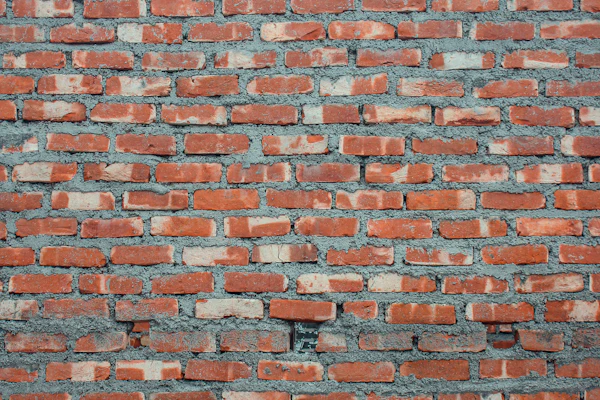
Brick that bows out between floors usually means the ties holding it to the building have rusted or let go.
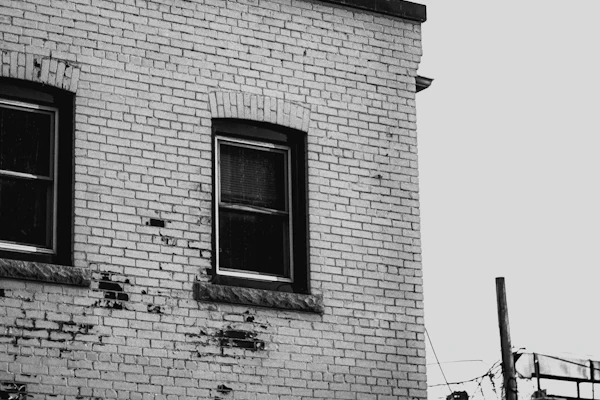
Cracks fanning out from window corners and rust stains below the head point to a lintel that’s corroding.
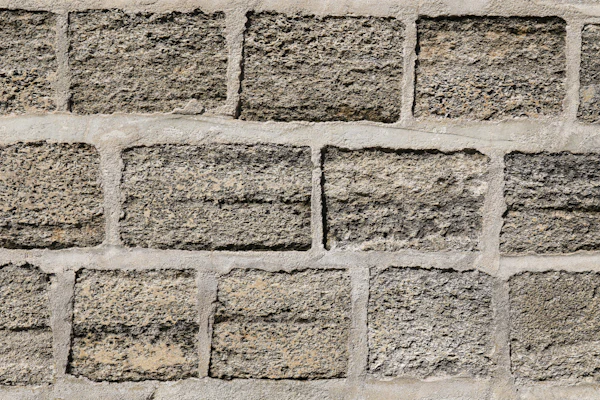
Sandy, recessed, or missing mortar joints let water straight into the wall.
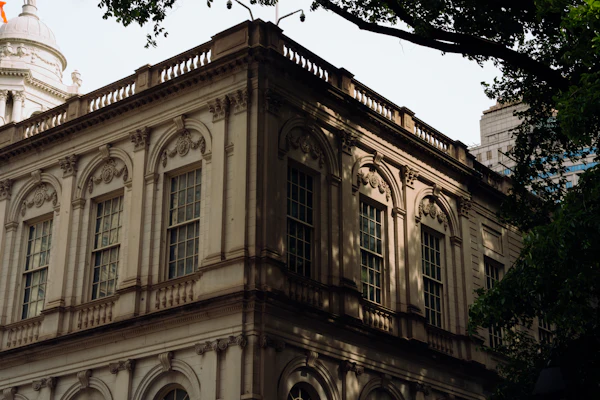
Crazed glaze, broken units, and loose ornament on older facades.
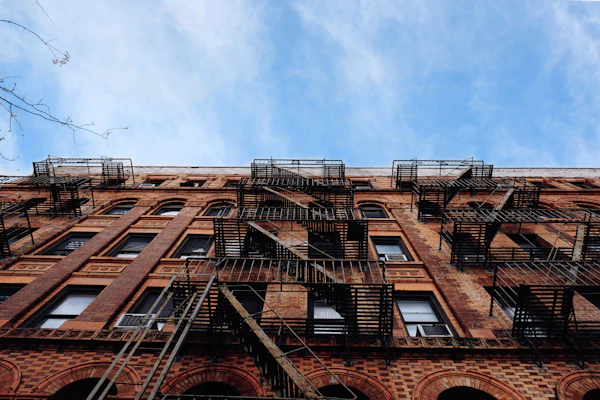
Leaning, cracked, or loose rooftop walls sit directly above the sidewalk.
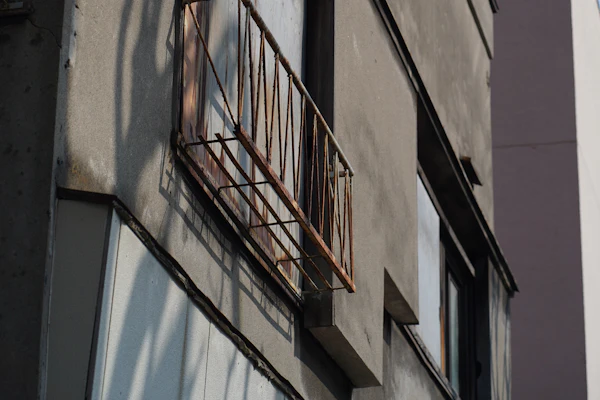
Spalling slabs, exposed rebar, and rusted railings on concrete and steel balconies.
How Serious Is Your Facade Damage?
Not every crack in a brick facade is an emergency, and some quiet-looking ones are. Use this as a rough guide to how fast to call a facade repair contractor. Only your QEWI can officially classify a condition in your FISP report.
Watch it
Note it and bring it up at the next inspection.
- Hairline cracks in mortar joints
- White salt stains on brick
- Light surface rust on railings
- Fine crazing in terra cotta glaze
- Peeling paint on exposed lintels
Repair soon
Likely to be rated SWARMP. Plan the work this season.
- Mortar that crumbles when scratched
- Rust stains running down from window heads
- Step cracks running across several courses
- Open joints in parapet coping
- Spalled edges on a balcony slab
Act now
Keep people away and call the same day.
- Brick or stone that shifts when touched
- Pieces on the sidewalk, roof, or setbacks
- A visible bulge or wall pulling away
- A parapet that leans or has loose coping
- Exposed, swelling rebar under a balcony
Why Small Facade Problems Turn Into Major Local Law 11 Repairs
Most facade damage in older masonry buildings follows the same four-step chain, and each step makes the next one worse.
Water gets in
Open joints, cracked copings, and failed caulk let rain and snowmelt into the wall.
Steel rusts
Hidden lintels, wall ties, shelf angles, and rebar start to corrode once they stay wet.
Rust expands
Rust takes up several times the space of the original steel and pushes on the masonry around it.
Masonry cracks
Brick, stone, and terra cotta crack and loosen, and every freeze-thaw cycle opens the gap a little wider.
Break the chain at the first step with routine pointing, coping repairs, and sealant work, and your next Local Law 11 inspection is far less likely to turn up an Unsafe rating.
Local Law 11 Inspection vs. Repair: Who Does What
Local Law 11 keeps facade inspection and facade repair separate on purpose. Already working with an inspector? We’ll coordinate with yours from the first site visit to the final sign-off.
Your QEWI
- Performs the close-up critical examination
- Rates each condition and sets completion dates
- Files the initial and amended reports in DOB NOW
- Recommends the type and location of public protection
- Files extension requests when repairs need more time
Our crew
- Reviews your report free and walks the building
- Prices every Unsafe and SWARMP item line by line
- Pulls DOB work permits and handles Landmarks filings
- Sets up scaffold, rigging, and sidewalk sheds, our own or rented
- Completes the repairs and documents them for your QEWI
Free FISP report review
Send us your inspection report and a few photos. We go through every listed condition, then walk the building to confirm the scope.
Itemized repair scope
You get a line-by-line proposal tied to the report, with each Unsafe and SWARMP item and its deadline clearly marked.
DOB permits, scaffolding, and sheds
We pull the permits and set up access with our own equipment or rentals, so access rarely holds up the start date.
Repairs and amended report
Our masonry and restoration crew completes the work and documents it, so your QEWI can re-inspect and file the amended report.
Inside a Local Law 11 Facade Repair Job
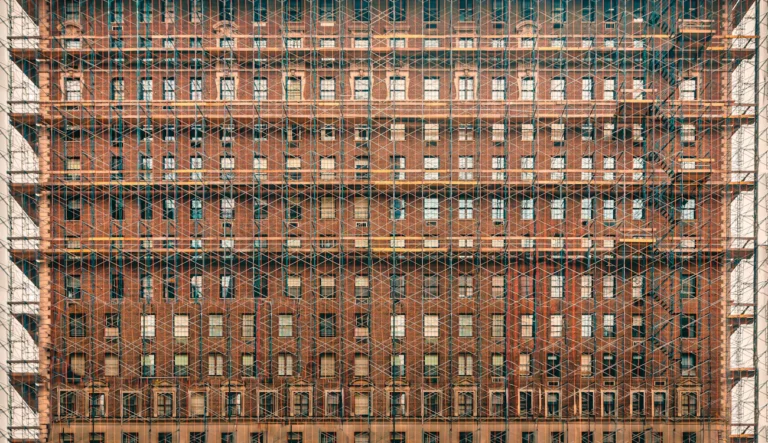
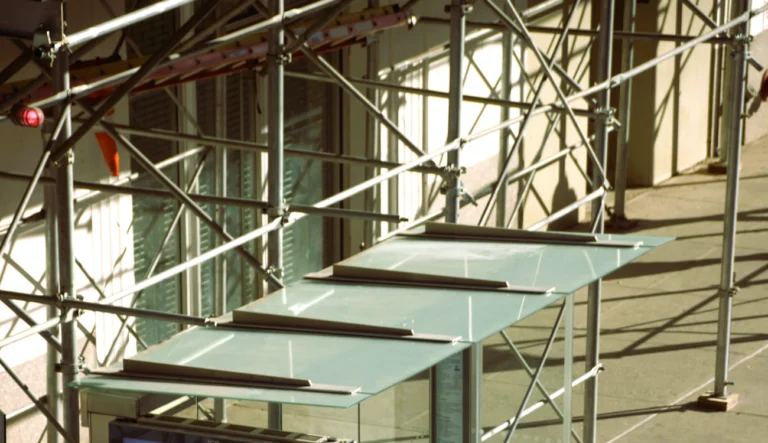
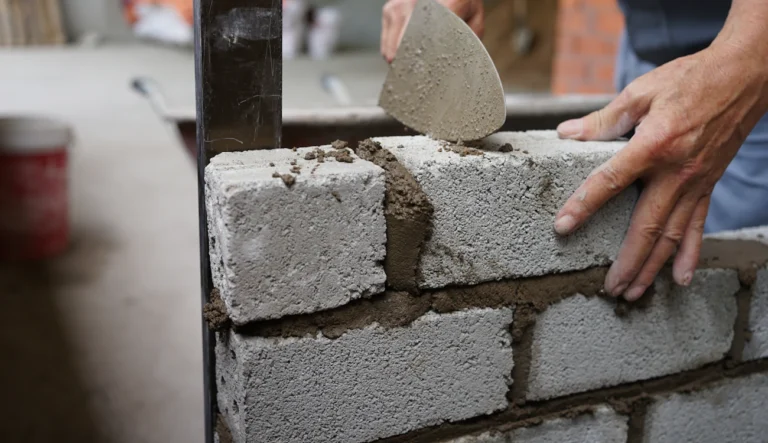
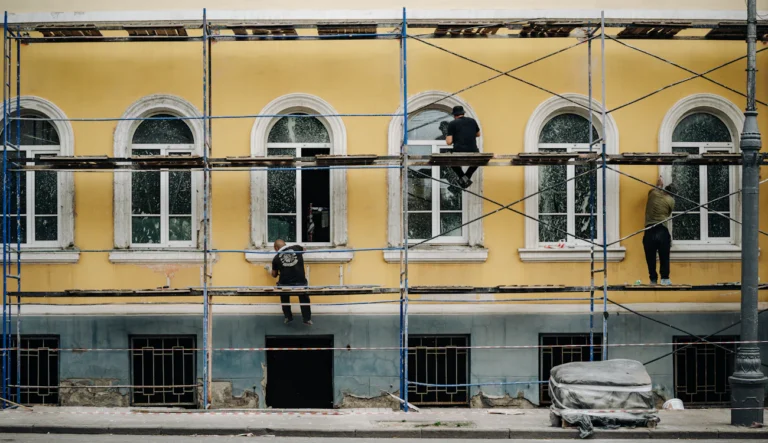
Most Local Law 11 repairs happen well above the street, on scaffolds, rigs, and swing stages. These photos show the access equipment and hands-on masonry work that go into a typical NYC facade restoration.
Areas We Serve for Local Law 11 Repairs
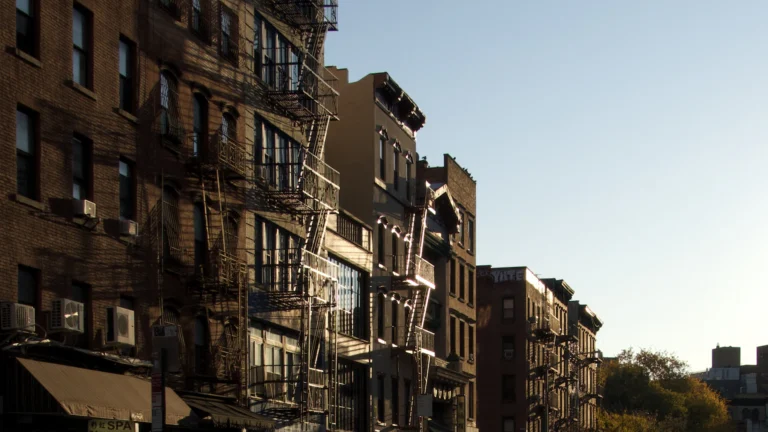
We take on Local Law 11 and FISP repair work across four NYC boroughs. Owners, property managers, and co-op and condo boards in these areas can call us for free report reviews, itemized repair scopes, and emergency response.
Manhattan
Brooklyn
Queens
The Bronx
Local Law 11 and FISP Repair FAQs
Local Law 11 is the common name for the Facade Inspection & Safety Program (FISP), the NYC rule that requires buildings taller than six stories to have their exterior walls inspected every five years. It's named for Local Law 11 of 1998, which expanded the city's earlier facade law, Local Law 10 of 1980.
Every NYC building taller than six stories. DOB's FISP Universe Map is a good first check, but confirming coverage is the owner's responsibility, so ask your inspector if you're unsure.
Look at the last digit of your tax block number. Blocks ending in 4, 5, 6, or 9 are in sub-cycle A (February 21, 2025 to February 21, 2027). Blocks ending in 0, 7, or 8 are in sub-cycle B (February 21, 2026 to February 21, 2028). Blocks ending in 1, 2, or 3 are in sub-cycle C (February 21, 2027 to February 21, 2029).
In some cases, yes. Since December 15, 2025, owners whose most recent status is No Report Filed can file a Safe or SWARMP report for sub-cycles B and C before their window opens, as long as the related civil penalties are paid. That stops late penalties from growing.
No. Only a Qualified Exterior Wall Inspector (QEWI), a New York State licensed architect or engineer approved by DOB, can perform the inspection and file the report. We don't inspect or file reports. We do the repairs your report calls for and work alongside your inspector until every condition is closed out.
That depends on the rating. Unsafe conditions need public protection right away and repairs within 90 days of the filing, with an extension request if the work will run longer. SWARMP items must be fixed by the completion date your inspector sets, one to five years out. A Safe rating means no repairs are required.
Late filing of the initial report costs $1,000 per month and failing to file costs $5,000 per year. An uncorrected SWARMP condition from the prior cycle brings a $2,000 penalty, and uncorrected Unsafe conditions draw monthly penalties plus sidewalk shed fines that rise the longer a shed stays up without work.
Until the Unsafe conditions are repaired and DOB accepts an amended Safe or SWARMP report. Shed permits now run in 90-day terms, and from the second renewal, a shed with no work in progress can draw fines of $10 to $200 per linear foot per month, so finishing the repairs quickly matters.
Yes. We file the DOB work permits, handle Landmarks Preservation Commission applications when the building is landmarked or in a historic district, and set up scaffolding, rigging, or a sidewalk shed. We own some of that equipment and rent the rest.
There's no flat price. Cost depends on the conditions in your report, how high the work is and how many walls it covers, the access needed, materials like matching brick or terra cotta, and permit requirements. That's why every proposal we send is itemized against your report instead of quoted as one lump sum.
Yes. We take emergency calls 24/7 and respond the same day to falling or loose masonry, unstable parapets, and other conditions that put people at risk. If something has already fallen or is about to, keep people clear of the area and call 911 or 311 first, then call us.
Get a Free Local Law 11 Repair Estimate
Send your FISP report and a few photos. We’ll review it free and get back to you the same day with a clear plan and next steps.